
Why I Believe in Printed Photos… and Why You Should Too
Industry Thoughts
Believe is an odd word to use, I know. Printed photos aren’t unicorns or leprechauns, though they do seem to be headed into being legend at least. Still, I want people to understand how important they truly are. Note that this is not about commercial work, but consumer portraits.
“But, But… It’s a Digital World!”

It’s the standard response in photography forums and comment sections. I’m sure people are shaking their heads and saying the above along with “Prints are old, prints are dead”… They’re not. I’m probably more tied into digital work than the average person. I’ve been a digital artist, a 3D modeler, mobile apps producer and UI specialist, and a web designer since I was 18/19. I also shoot nearly 100% digital, edit my client work in various programs and so on. See, I get it, it’s a digital world!
I believe it just shouldn’t end there for portraits. Though I continue to rely on newer technology for production, I realized early on that the final stage of creating a masterpiece is when it’s displayed in printed form. No, I’m not an old-timer, at least I don’t think so, yet. I consider it still being “baked in the oven” when it’s digital, waiting to reach that final viewing form for appreciation. On top of that, we’re still not in an age where full, in-home, electronic walls are the norm anyway. Sure, we have those cute, little digital frames that mostly can’t seem to display color correctly, but that’s not enough. Neither are your TV’s screensaver or phones. It’s all about the walls.
Printing is Full Service; Digital Alone Leaves the Job Half Done

Ready the pitchforks: I believe it’s lazy to simply hand over images, especially while calling ourselves a professional service. I’m saying this about my former self too. Compared to my current offerings, and the services of many portrait professionals I admire, I happily call younger me lazy. I saw my clients’ images, didn’t feel like learning about color space, papers, and inks at the time, and thought “eh, I’ll just give it to them to deal with, everyone else does that.”
What I didn’t realize at the time was that I was putting the job of preservation (choosing paper, selecting walls for display properly, album storytelling) all in the hands of my clients. I was making them do the work they had no expertise in. They hired me for my professional skill, my eye, my customer service, and I basically handed them the raw dough and said, go home and cook it yourself. While that may work for some, think of how many professional services you hire for in your everyday life where the final stage is handed off to you. Any? How many of your best service providers said, “Well, my work here is done, you finish up for me. Good luck.”? Wouldn’t you call that lazy? I would.
But Clients Want Digital Images

I thought this too, but it’s not entirely true. From reactions in my ordering appointments and when delivering portraits, they really wanted tangible, lasting portraits that they or others with a camera can’t take themselves. They want quality artwork that makes them smile when they see it, artwork that tells a story about their session day that they proudly tell to others, and artwork that welcomes them home, especially on a bad day. Even when I’ve been on the other side as a client, I learned that it’s more that we’ve been trained by others to think this way about digital, and we end up mostly pumping out quantity over quality for the sake of “variety” instead.
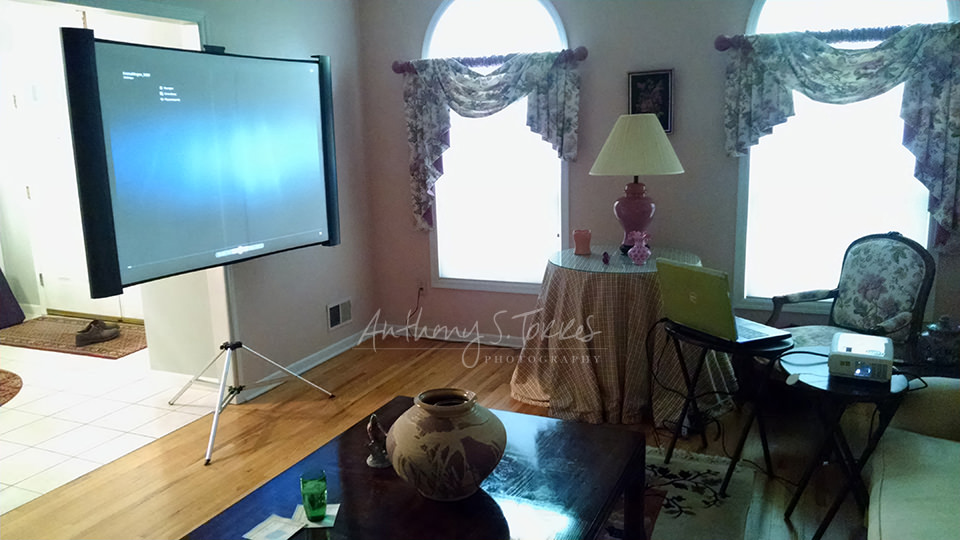
It’s just like the average person believing that 8×10” is the largest they need. I watch my clients sit in shock in front of my projector viewing a designed wall on a screen that shows actual, proper sizes. They realize what I realized: most people don’t perceive size correctly. This is where increased service and in-person viewings help over online galleries.
The Longevity Dispute
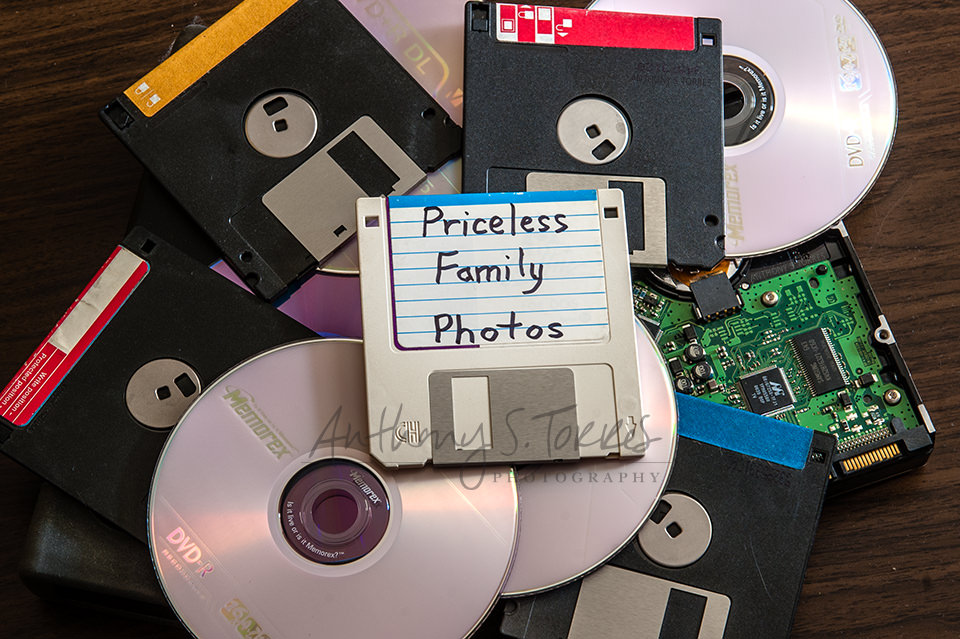
Printing is longevity. I take into account both physical AND viewing lifetimes for this. Think about it. Most of our digital photos are hidden in a hard drive on our computer or stored on a phone or still sitting on a single memory card inside a point-and-shoot camera, never downloaded. They’re almost never displayed. Their viewing lifetime is minutes, if that, total. You share them on Facebook, you get a few likes, and it’s gone. Maybe it comes back for a throwback Thursday post or when someone hits like on your Instagram post 48 weeks later. The most photographed generation is in danger of having no pictures.
Even worse, when I questioned friends, family, and clients on their digital backup solution, they mostly don’t use any backups for their images. So, one drive failure or a phone drop in the toilet, and those memories (barely looked at to begin with) are gone. The worst part: how much did you really miss them, if you never looked at them after you took them? Backups require effort too. You’ll almost always have to deal with transferring your backups to newer forms with technology. Tapes, LaserDiscs, CDs, DVDs, hard drives need updating to newer hard drives, USB, etc. Is your album still viewable today as it was from decades ago? If you cared for it properly, yep, still good to go. All you really have to do is keep it in a clean environment and minimize exposure to sunlight.
There is a reason why archival papers and materials and artwork from centuries ago are still around. Properly care for it, and it’ll last longer than your hard drives, last longer than a number of phones, and last longer than us. You’ll have changed cars and homes more often. They last. This is my goal for my portraits and why I don’t consider digital images their final form for display.
The Blind Leading the Blind, Unfortunately
It’s almost become a given for years for amateur and new photographers to fall for this digital myth. Other burnt-out, barely-making-a-living photographers tell them it’s just how it is. Myths become fact. They believe we’re supposed to do a session, edit quickly (if at all anymore), and just hand over a disc/USB and say “Here’s your important, heirloom family portraits!” I believed it when I started as well. It started as cameras were cheaper to pick up, and someone looked at websites of people around them and then copied them, saying, OK, well, if they price and do business like this, it must be the rule. Unfortunately, as time goes on, people learn the business side later, realize they need to do hundreds of sessions to pay the bills, don’t feel like editing images at that volume and resort to quick-fix filters and actions without thought to the image. It becomes a chore and sadly, they burn out and get clients who really don’t value their efforts.
It’s Time Clients Get More and Expect More
I finally took a step back to say “Enough! I want to produce long-lasting art, something people will care about years later.” I researched a lot about printing, learned about business, and looked to those in the industry I respected, and realized it can and would be the business I wanted. I could finally give my clients a level of service they hadn’t seen before from a photographer, and avoid this race to the bottom that’s prevalent in our industry. Clients don’t know sizes or best mediums, and in-person service changed it all, and really made clients feel cared for. And guess what, it wasn’t just old-timers believing this in my conversations. Many photographers much younger than myself realized we were letting our industry slip away to lackluster service. We believe our clients truly deserve the best. That’s why I chose quality, and why I stand behind every portrait I deliver.
Even my younger clients are trying to break out of the flood of digital images they never see again to have something meaningful around. The realization is creeping in. They’ve done the disc, gotten the volume of images, and are thirsty for more. Help your clients leave all the details (the paper choice, the color calibration, the walls they should use) to the professionals so they can just enjoy the artwork and the memories.
Print is not dead. It’s needed now more than ever, simply hidden, and we, as experts, need to bring its importance to light.
Ready to put something on your wall?
Every session includes an in-person viewing appointment. We’ll find the right image, the right size, and the right place for it.
Reserve a Consultation